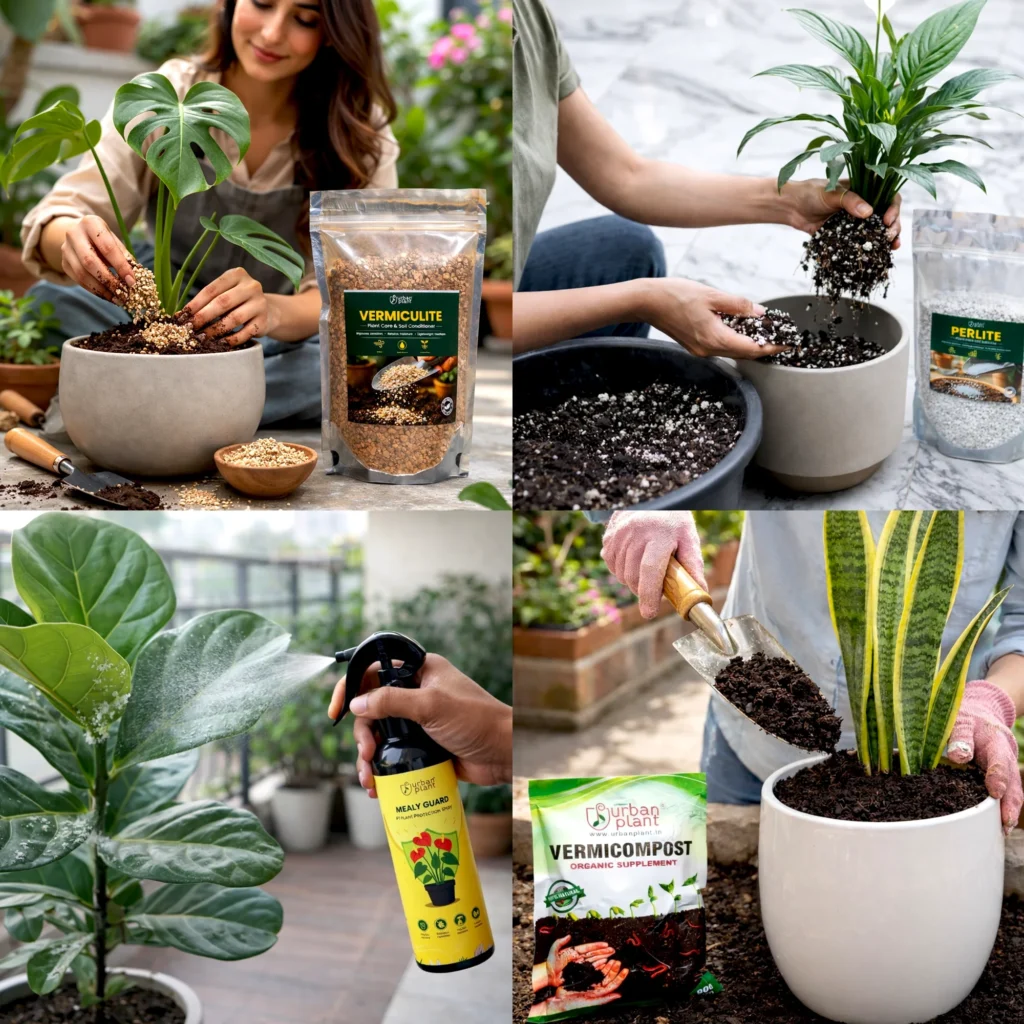
Introduction
Indoor plants bring beauty, freshness, and a touch of nature into your home. However, unlike outdoor plants, houseplants rely entirely on the nutrients available in their potting soil. Over time, these nutrients become depleted, making regular fertilization essential for healthy growth.
Choosing the right fertilizer can make a significant difference in your plants’ appearance, helping them develop lush foliage, vibrant flowers, and stronger roots. In this guide, we’ll explore the best fertilizers for indoor plants, how to use them correctly, and common mistakes to avoid.
Why Do Indoor Plants Need Fertilizer?
Potting soil contains only a limited amount of nutrients. As plants grow, they absorb these nutrients, leaving the soil less fertile over time.
Regular fertilizing helps:
- Promote healthy leaf growth
- Encourage strong root development
- Improve flowering and fruit production
- Increase resistance to pests and diseases
- Keep foliage vibrant and green
Essential Nutrients for Indoor Plants
A balanced fertilizer contains three primary nutrients:
Nitrogen (N)
- Promotes lush, green foliage.
- Essential for leafy houseplants.
Phosphorus (P)
- Supports root growth and flowering.
- Important for blooming plants.
Potassium (K)
- Improves overall plant health.
- Enhances disease resistance and stress tolerance.
Many all-purpose fertilizers have an NPK ratio such as 10-10-10 or 20-20-20, making them suitable for most indoor plants.
Best Types of Fertilizers for Indoor Plants
1. Liquid Fertilizer
Liquid fertilizers are fast-acting and easy to apply. They are diluted with water and used during regular watering.
Best for:
- Pothos
- Peace Lily
- Spider Plant
- Philodendron
- Monstera
Pros
- Quick nutrient absorption
- Easy dosage adjustment
- Excellent for active growing seasons
2. Slow-Release Granules
These fertilizers gradually release nutrients over several weeks or months.
Benefits
- Low maintenance
- Long-lasting nutrition
- Reduced risk of overfeeding
Ideal for busy plant owners.
3. Organic Compost
Organic compost naturally enriches the soil while improving moisture retention.
Benefits include:
- Sustainable gardening
- Improved soil health
- Supports beneficial microorganisms
4. Vermicompost
Made from earthworm castings, vermicompost is rich in natural nutrients and beneficial microbes.
Advantages:
- Encourages healthy root growth
- Safe for most indoor plants
- Improves soil structure
5. Seaweed Fertilizer
Seaweed extracts provide trace minerals and natural growth stimulants.
Best for:
- Weak plants
- Newly repotted plants
- General plant health
6. Fish Emulsion
Fish emulsion is an organic fertilizer rich in nitrogen and micronutrients.
Benefits:
- Encourages lush foliage
- Improves soil fertility
- Excellent for leafy plants
Use sparingly indoors due to its strong odor.
Best Fertilizer for Popular Indoor Plants
| Plant | Recommended Fertilizer |
|---|---|
| Snake Plant | Balanced liquid fertilizer once a month |
| Monstera | 20-20-20 liquid fertilizer |
| Pothos | Balanced fertilizer every 4–6 weeks |
| Peace Lily | Phosphorus-rich fertilizer during blooming |
| Spider Plant | All-purpose liquid fertilizer |
| ZZ Plant | Slow-release fertilizer twice a year |
| Rubber Plant | Balanced fertilizer monthly |
How Often Should You Fertilize Indoor Plants?
General guidelines:
- Spring: Every 2–4 weeks
- Summer: Every 2–4 weeks
- Autumn: Reduce feeding
- Winter: Fertilize sparingly or not at all, as most houseplants grow more slowly.
Always follow the instructions on the fertilizer label.
Signs Your Indoor Plant Needs Fertilizer
Watch for these symptoms:
- Slow growth
- Pale or yellow leaves
- Small new leaves
- Weak stems
- Poor flowering
- Nutrient-deficient soil
Common Fertilizing Mistakes
Avoid these common errors:
- Over-fertilizing
- Applying fertilizer to dry soil
- Feeding dormant plants during winter
- Using the wrong fertilizer type
- Ignoring label instructions
Tips for Healthy Indoor Plants
- Water before applying fertilizer.
- Use well-draining potting mix.
- Place plants in suitable lighting.
- Remove dead leaves regularly.
- Repot plants when they become root-bound.
- Clean leaves to improve photosynthesis.
Final Thoughts
Choosing the best fertilizer for indoor plants doesn’t have to be complicated. Whether you prefer liquid fertilizers for fast results or organic options like vermicompost and compost for sustainable gardening, consistent care is the key to healthy houseplants.
Feed your plants during their active growing season, avoid over-fertilizing, and monitor their growth regularly. With proper nutrition, your indoor garden will stay lush, vibrant, and beautiful throughout the year.
Frequently Asked Questions
1. What is the best fertilizer for indoor plants?
A balanced NPK fertilizer such as 10-10-10 or 20-20-20 works well for most indoor plants.
2. How often should I fertilize houseplants?
Most indoor plants benefit from feeding every 2–4 weeks during spring and summer.
3. Is organic fertilizer better than chemical fertilizer?
Organic fertilizers improve soil health over time and are environmentally friendly, while chemical fertilizers provide nutrients more quickly.
4. Can too much fertilizer harm indoor plants?
Yes. Over-fertilizing can burn roots, damage leaves, and stunt plant growth.
5. Should I fertilize indoor plants in winter?
Most indoor plants require little or no fertilizer during winter because their growth naturally slows down.