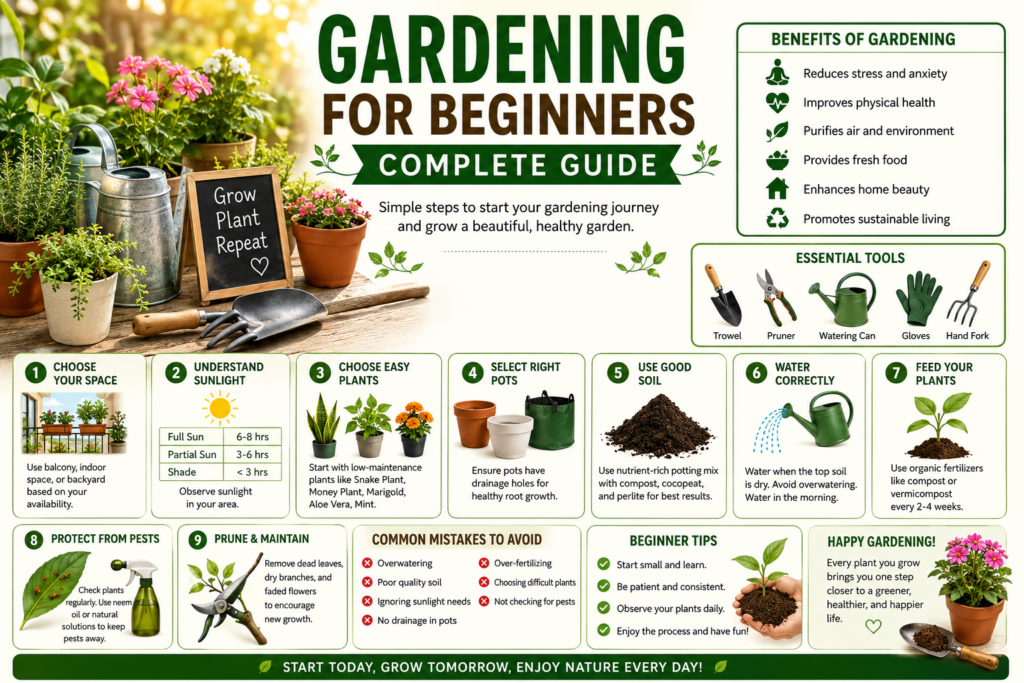
Gardening for Beginners: Complete Guide
Gardening is more than just planting flowers or vegetables—it’s a rewarding hobby that brings nature closer to your home. Whether you have a spacious backyard, a compact balcony, or a sunny windowsill, you can create a beautiful garden with the right knowledge and a little patience.
This beginner-friendly guide covers everything you need to know to start your gardening journey successfully.
Why Should You Start Gardening?
Gardening offers numerous physical, mental, and environmental benefits.
Benefits of Gardening
- Reduces stress and anxiety
- Improves physical fitness
- Beautifies your home
- Purifies indoor and outdoor air
- Provides fresh herbs, vegetables, and fruits
- Encourages sustainable living
- Creates a relaxing and peaceful environment
Step 1: Decide Where to Grow Your Garden
Choose a location that matches your available space.
Balcony Garden
Perfect for apartments and small homes. Use pots, railing planters, hanging baskets, and vertical planters to maximize space.
Indoor Garden
Great for homes without outdoor areas. Place plants near bright windows where they receive adequate sunlight.
Backyard Garden
Ideal for growing vegetables, flowers, herbs, shrubs, and fruit trees.
Step 2: Understand Sunlight Requirements
Most plants require sunlight to thrive.
| Sunlight | Hours | Suitable Plants |
|---|---|---|
| Full Sun | 6–8 hours | Tomatoes, Roses, Herbs |
| Partial Sun | 3–6 hours | Spinach, Ferns, Lettuce |
| Shade | Less than 3 hours | Snake Plant, Peace Lily, ZZ Plant |
Observe your garden throughout the day to identify sunny and shaded areas.
Step 3: Choose Easy Plants for Beginners
Start with low-maintenance plants that are forgiving of beginner mistakes.
Best Indoor Plants
- Snake Plant
- Money Plant (Pothos)
- Spider Plant
- ZZ Plant
- Peace Lily
Best Outdoor Plants
- Marigold
- Hibiscus
- Tulsi (Holy Basil)
- Mint
- Aloe Vera
These plants require minimal care and grow well in most climates.
Step 4: Select the Right Pots and Containers
Healthy roots need proper drainage.
Choose containers made from:
- Terracotta
- Ceramic
- Plastic
- Cement
- Grow bags
Ensure every pot has drainage holes to prevent root rot.
Step 5: Use Nutrient-Rich Soil
Healthy plants begin with healthy soil.
A good potting mix should contain:
- Garden soil
- Compost
- Coco peat
- Vermicompost
- Perlite or sand for drainage
Avoid using heavy garden soil alone in containers.
Step 6: Water Plants Correctly
Overwatering is the most common mistake among beginners.
Watering Tips
- Water early in the morning.
- Check soil moisture before watering.
- Keep the soil moist, not soggy.
- Reduce watering during rainy weather.
- Avoid wetting leaves unnecessarily.
Step 7: Feed Your Plants Regularly
Plants need nutrients to grow strong.
Use organic fertilizers such as:
- Compost
- Vermicompost
- Cow manure
- Bone meal
- Seaweed fertilizer
Feed flowering and vegetable plants every 2–4 weeks during the growing season.
Step 8: Essential Gardening Tools
Every beginner should have a basic gardening toolkit.
Must-Have Tools
- Hand trowel
- Garden pruner
- Watering can
- Spray bottle
- Gardening gloves
- Hand fork
- Garden rake
- Plant labels
Quality tools make gardening easier and more enjoyable.
Step 9: Protect Plants from Pests
Common garden pests include aphids, mealybugs, spider mites, and caterpillars.
Natural Pest Control
- Spray neem oil
- Use mild soap solution
- Remove damaged leaves
- Keep plants clean
- Encourage beneficial insects like ladybugs
Inspect your plants weekly to catch problems early.
Step 10: Prune and Maintain Your Garden
Pruning helps plants stay healthy and encourages new growth.
Remove:
- Dead flowers
- Yellow leaves
- Broken branches
- Diseased stems
Regular maintenance keeps your garden looking neat and productive.
Common Gardening Mistakes Beginners Should Avoid
- Overwatering plants
- Planting in poor-quality soil
- Ignoring sunlight requirements
- Using pots without drainage holes
- Fertilizing too much
- Choosing difficult plants
- Forgetting regular pest inspections
Learning from these mistakes will improve your gardening skills over time.
Beginner Gardening Tips
- Start with a few easy-care plants.
- Learn about each plant’s specific needs.
- Keep a watering schedule.
- Rotate pots for even sunlight.
- Clean gardening tools after use.
- Be patient and enjoy the process.
Frequently Asked Questions
Which plant is best for beginners?
Snake Plant, Money Plant, Aloe Vera, Spider Plant, and Marigold are excellent choices.
How often should I water my plants?
Water when the top inch of soil feels dry. The frequency depends on the plant type, weather, and pot size.
Can I garden in a small apartment?
Yes! Balcony gardens, hanging planters, and indoor plants are perfect for limited spaces.
Do I need expensive tools to start gardening?
No. A simple set of basic gardening tools is enough for beginners.
Final Thoughts
Gardening is a relaxing, rewarding, and lifelong hobby. You don’t need a large backyard or years of experience to get started. With the right plants, proper soil, regular watering, and a little care, anyone can create a thriving garden.
Whether you’re growing flowers, herbs, vegetables, or indoor plants, every small step brings you closer to a greener, healthier lifestyle. Start with a few pots, enjoy the learning process, and watch your garden flourish over time.
Happy Gardening!