
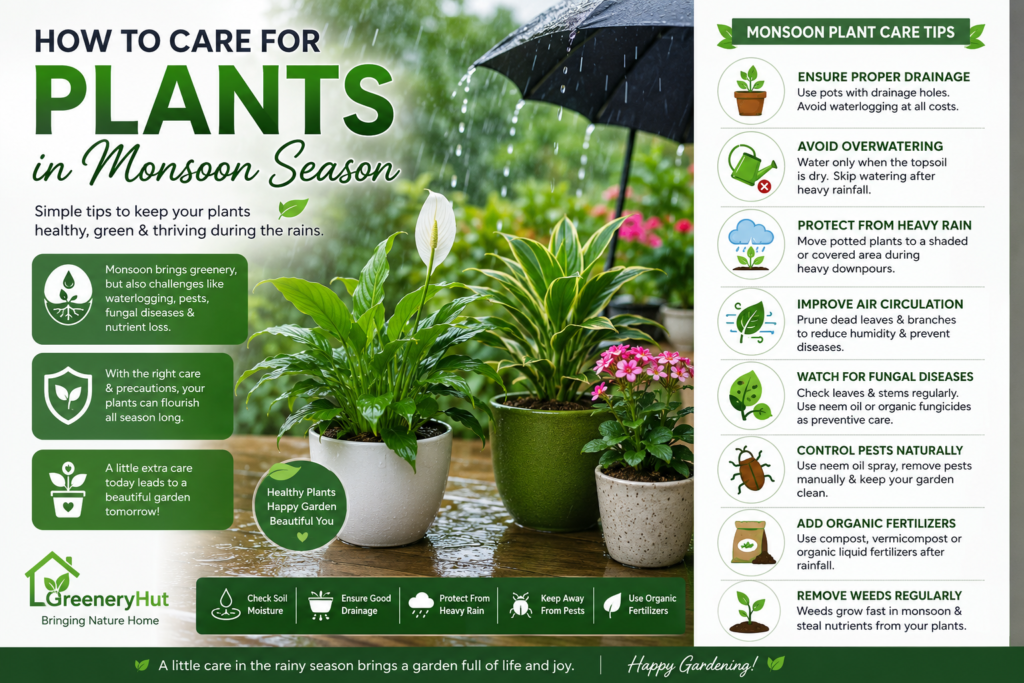
Monsoon brings much-needed relief from the summer heat, filling gardens with fresh greenery and vibrant blooms. However, excessive rainfall, high humidity, and reduced sunlight can also create challenges for plant health. Waterlogged soil, fungal diseases, pest infestations, and root rot become common problems during this season.
With proper care, your garden can thrive throughout the rainy months. Here’s a complete guide to caring for your plants during the monsoon season.
Why Monsoon Plant Care Is Important
Although rain provides natural watering, it doesn’t always mean your plants are getting the right care. Continuous rainfall can:
- Cause root rot due to waterlogging
- Encourage fungal and bacterial diseases
- Wash away essential nutrients from the soil
- Attract harmful insects and pests
- Reduce sunlight needed for healthy growth
Taking preventive measures helps your plants remain healthy, lush, and productive.
1. Ensure Proper Drainage
One of the biggest threats during monsoon is excess water.
Tips:
- Use pots with sufficient drainage holes.
- Raise containers slightly using pot stands.
- Avoid allowing water to collect in saucers.
- Mix sand, cocopeat, or perlite into the soil to improve drainage.
Healthy roots require oxygen as much as they need water.
2. Avoid Overwatering
Many gardeners continue watering plants without checking soil moisture.
Before watering:
- Insert your finger about 2 inches into the soil.
- Water only if the soil feels dry.
- Skip watering after heavy rainfall.
Remember, overwatering is more harmful than underwatering during monsoon.
3. Protect Plants from Heavy Rain
Continuous rain can damage delicate plants and flowers.
You can:
- Move potted plants under a covered balcony or shade.
- Use transparent plastic covers during heavy showers.
- Provide temporary garden shelters for sensitive plants.
Protecting plants from excessive rainfall prevents stem breakage and soil erosion.
4. Improve Air Circulation
High humidity encourages fungal growth.
Prune:
- Dead leaves
- Yellow leaves
- Weak branches
- Crowded stems
Better airflow keeps plants healthy and reduces disease risk.
5. Watch for Fungal Diseases
Common monsoon diseases include:
- Powdery mildew
- Leaf spot
- Root rot
- Stem rot
- Downy mildew
Prevention Tips
- Water only at the base.
- Avoid wetting leaves.
- Remove infected leaves immediately.
- Use neem oil or organic fungicides regularly.
Early treatment prevents the disease from spreading.
6. Control Pests Naturally
Rainy weather attracts many insects.
Common pests include:
- Aphids
- Mealybugs
- Snails
- Slugs
- Caterpillars
- Mosquitoes around standing water
Natural pest control:
- Spray diluted neem oil every 10–15 days.
- Remove pests manually.
- Keep the garden clean.
- Avoid stagnant water.
7. Add Organic Fertilizers Carefully
Heavy rain can wash nutrients away.
Apply:
- Vermicompost
- Compost
- Bone meal
- Seaweed fertilizer
- Organic liquid fertilizers
Use fertilizers after rainfall rather than before heavy showers.
8. Remove Weeds Regularly
Weeds grow rapidly during monsoon.
They compete with plants for:
- Water
- Nutrients
- Sunlight
Regular weeding keeps your garden clean and healthy.
9. Support Tall Plants
Strong winds and rain can bend or break stems.
Use:
- Bamboo sticks
- Plant stakes
- Soft garden ties
Support is especially important for flowering plants, vegetables, and climbers.
10. Keep Leaves Clean
Mud splashes can spread diseases.
After rainfall:
- Gently wipe broad leaves.
- Remove damaged foliage.
- Check for insect eggs underneath leaves.
Healthy leaves improve photosynthesis.
11. Repot Only When Necessary
Avoid major repotting during heavy rains unless absolutely required.
If repotting:
- Use fresh, well-draining potting mix.
- Trim unhealthy roots.
- Place the plant in a sheltered location for a few days.
12. Choose Monsoon-Friendly Plants
Many plants love rainy weather.
Excellent choices include:
- Money Plant
- Areca Palm
- Snake Plant
- Peace Lily
- Ferns
- Caladium
- Coleus
- Hibiscus
- Jasmine
- Rain Lily
- Turmeric
- Ginger
These plants generally perform well with increased humidity.
Essential Monsoon Plant Care Checklist
✔ Check soil moisture before watering
✔ Ensure proper drainage
✔ Remove weeds regularly
✔ Inspect plants for pests
✔ Spray neem oil every 10–15 days
✔ Prune damaged branches
✔ Add organic compost
✔ Protect delicate plants from heavy rain
✔ Improve air circulation
✔ Remove infected leaves immediately
Common Mistakes to Avoid
- Watering every day without checking soil.
- Leaving pots in standing water.
- Ignoring fungal infections.
- Over-fertilizing during heavy rains.
- Allowing weeds to spread.
- Keeping plants in dark, poorly ventilated areas.
Avoiding these mistakes will significantly improve plant health.
Final Thoughts
The monsoon season can be one of the most rewarding times for gardeners when plants receive the right care. By ensuring proper drainage, preventing fungal diseases, managing pests naturally, and maintaining good airflow, your garden can flourish despite the challenges of heavy rain and humidity.
Healthy monsoon gardening is all about balance—providing enough moisture without waterlogging, protecting plants from excessive rain, and staying proactive with maintenance. With these simple practices, you’ll enjoy vibrant foliage, stronger roots, and beautiful blooms throughout the rainy season.
Whether you’re growing indoor plants, balcony gardens, vegetables, or ornamental flowers, a little extra attention during the monsoon goes a long way in keeping your garden green and thriving.